

Seriously, I thought Haier was a German brand! Detrimental effects of country of origin misclassification on bottomline
Many brands, particularly those from countries associated with poor production quality, attempt to disguise their origins. Some even attempt to deliberately associate their brand with a country that has a strong image to win over customers. Our recent research suggests that this can backfire, however. When customers find out the truth about a brand’s origins, they are not happy about it. In fact, they feel discontent and are put off buying from them in the future.

Invite: Status Consumption: A Journey Through Time & Cultures
Inaugural Professorial Lecture entitled 'Status Consumption: A Journey Through Time & Cultures' Thursday 3 April 2014 6pm at GCU London campus at 40 Fashion Street, London, E1 [Read Story]

Werther effect (the power of negative news)
The story behind the Werther effect is highly intriguing and chilling. In 1774, the giant of German literature, Johann Wolfgang von Goethe, published a novel [Read Story]
What is your Chinese New Year luxury strategy?
“The US is luxury’s largest market. Japan still remains a large luxury market in terms of absolute size. However, China is [Read Story]
What makes a good luxury brand great?
The article discusses why some luxury brands become larger than life and are called great while others can't seem to break the barrier.
Comparing the luxury brand value
Luxury brands are bought in different countries for different values. This study evaluates those values consumers consider and provides a comparison between Indian and British luxury consumers.
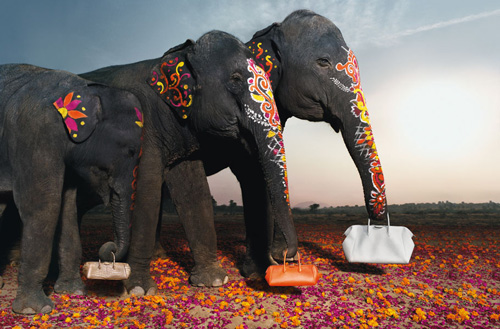
They are not all same (Part 2): Differences in Asian Luxury Consumption
In the part 1, I discussed how many luxury brands are failing across Asia as they treat Asian consumers as a homogeneous group and how it led my co-authors and I to examine this phenomenon in-depth. Using the value perceptions framework and theory of impression management, we discovered some very interesting differences among consumers in three largest emerging economies of Asia, namely, China, India and Indonesia.
In the first part, I wrote about what Indian consumers’ value the most and how to specifically market to these consumers. In this part, I will offer comparative findings regarding [Read Story]
Listen to my latest radio interview

How in-store sampling influences your choice?
Can in-store sampling motivate you to act and purchase a cosmetics product? In this research, we looked at the significant motivations driving cosmetics shopping in retail setting, and examined how in-store sampling can be used to enhance choice goal attainment. We also focused on the influence of choice goal attainment on decision satisfaction when in-store sampling is used as a promotion technique.
Werther effect (the power of negative news)
The story behind the Werther effect is highly intriguing and chilling. In 1774, the giant of German literature, Johann Wolfgang von Goethe, published a novel titled The Sorrows of Young Werther (German: Die Leiden des jungen Werthers). Finished in six weeks of intensive writing during January–March 1774, the novel instantly made the 24-year-old Goethe one of the first international literary celebrities. The novel presents an autobiographical account of a young artist named Werther. The novel which ends with the protagonist commits suicide had a remarkable impact in terms that it sparked a wave of emulative suicides across Europe. So powerful [Read Story]